
Healthy aging · functional strength
If stairs feel steeper, grocery bags feel heavier, or recovery takes longer than it used to, age may be part of the picture—but it is rarely the only thing worth checking.
Educational guide: This article does not diagnose muscle loss or replace medical, nutrition, or exercise advice.
Five everyday clues worth noticing
A difficult day is not a diagnosis. Look for a repeated change over several weeks:
- Getting up from a low chair requires more effort or using your hands.
- Stairs, hills, or carrying groceries feel noticeably harder.
- You recover more slowly from familiar activity.
- You have unintentionally lost weight, appetite, or muscle tone.
- Weakness, fatigue, pain, balance changes, or breathlessness are limiting normal life.
The National Institute on Aging describes sarcopenia as a decline in muscle mass, strength, and function, but similar experiences can have other explanations. General weakness deserves a conversation with a healthcare professional—especially when it is new, progressing, or affecting safety.
The foundation: challenge, fuel, recover, review
Challenge
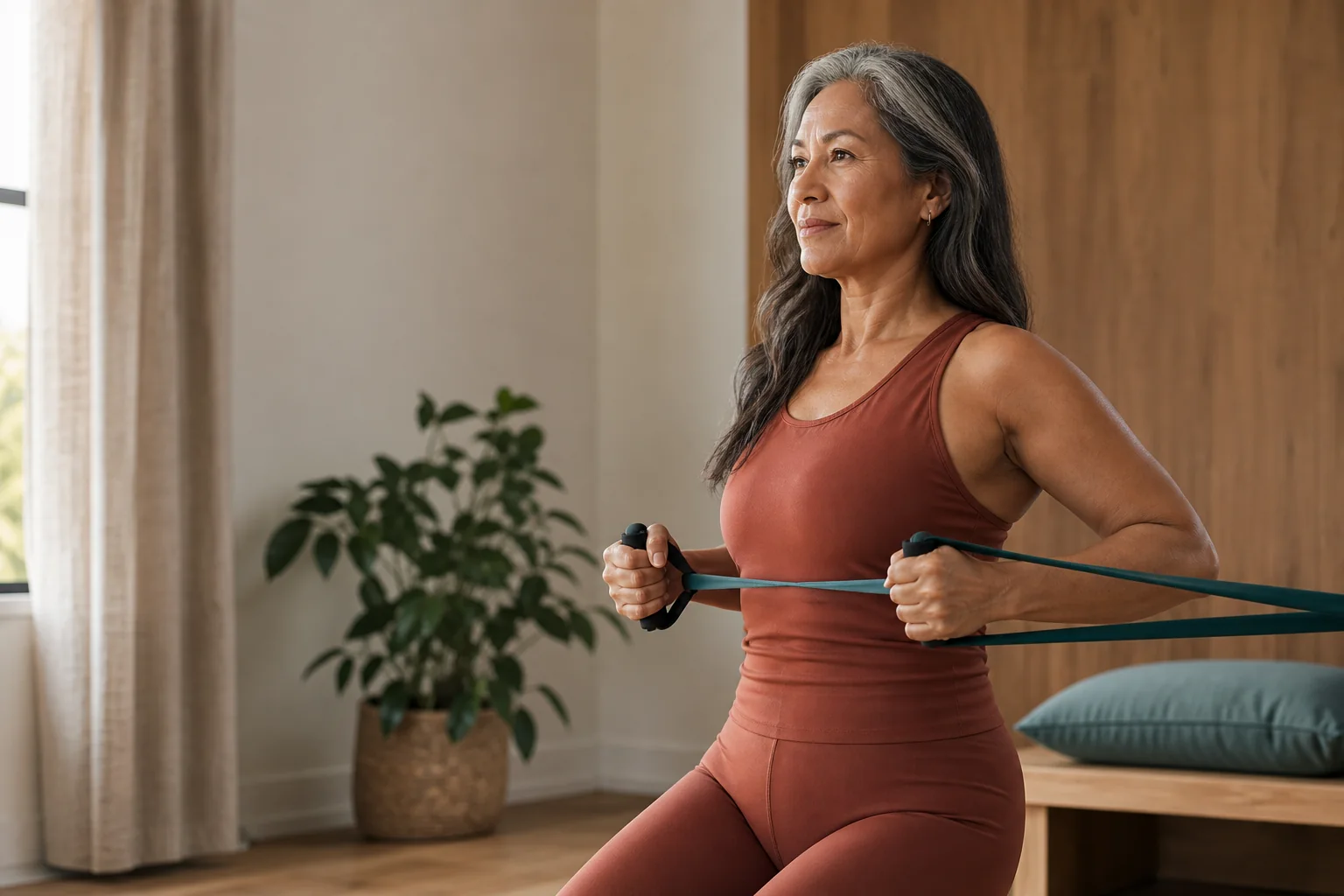
Walking supports health, but it is not the same stimulus as resistance training. Bands, body-weight exercises, machines, or free weights can all create resistance. Progress gradually and choose a plan you can repeat safely.
Fuel
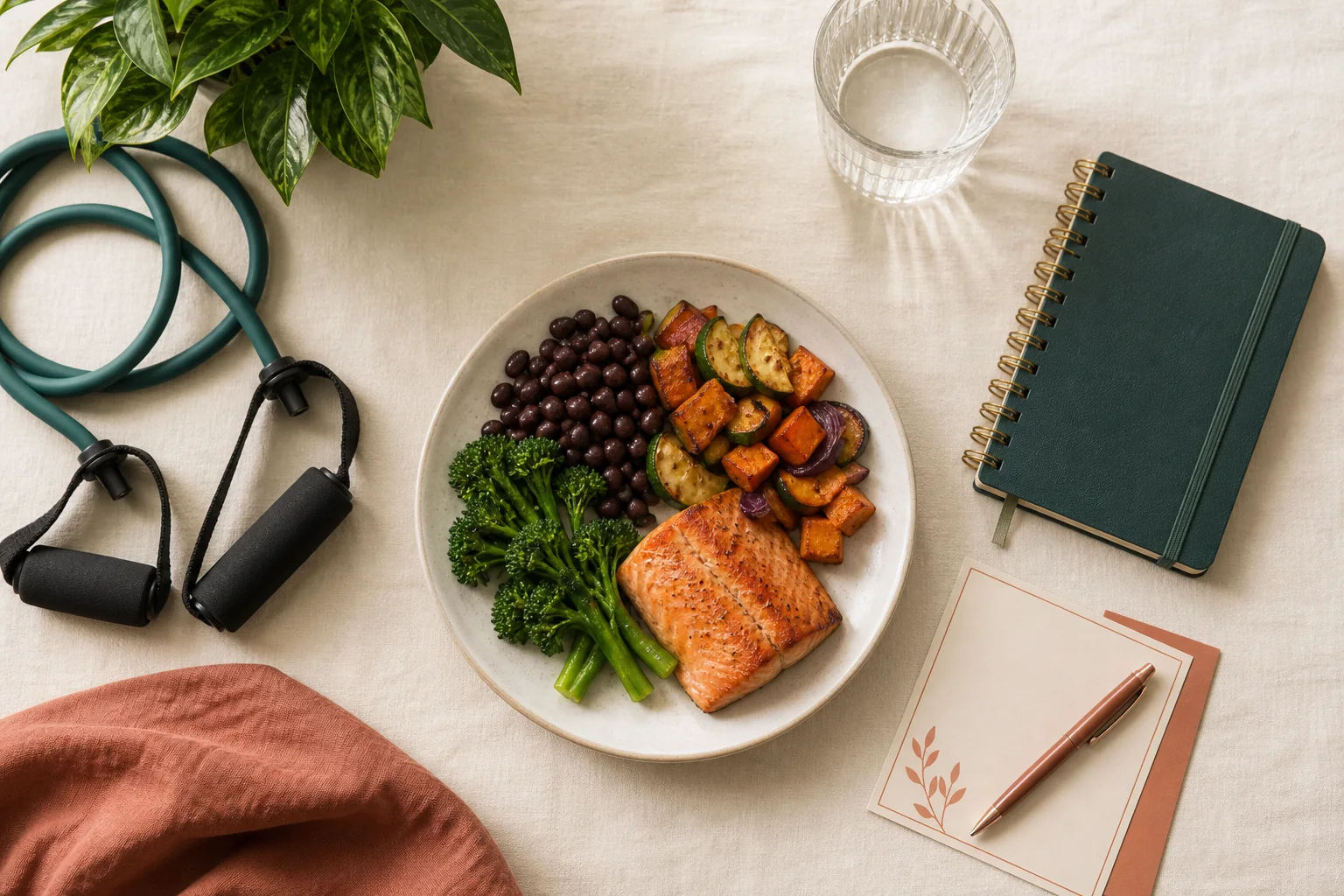
A supplement cannot compensate for chronically undereating. Look for meaningful protein sources across the day and consider whether appetite, restrictions, digestion, cost, or aggressive dieting are creating a gap.
Recover
Muscles adapt between sessions. Sleep, rest days, hydration, and a gradual increase in challenge matter. More soreness is not proof of a better workout.
Review
Fatigue and weakness can overlap with anemia, thyroid problems, infection, low intake, sleep disorders, medicines, pain, depression, and other conditions. Do not use an online checklist to label the cause.
What essential amino acids actually do
Amino acids are the components the body uses to make proteins. Nine are considered essential because the body cannot make enough of them and must obtain them from food: histidine, isoleucine, leucine, lysine, methionine, phenylalanine, threonine, tryptophan, and valine.
Research in older women shows that essential-amino-acid mixtures can stimulate muscle protein synthesis. Longer-term results are less uniform: some trials found improvements in lean mass or physical performance, while others found no added improvement in muscle mass or strength when amino acids were combined with exercise.
That is why “amino acids support muscle protein synthesis” is more accurate than “amino acids reverse age-related muscle loss.”
Food, protein powder, or amino-acid tablets?
| Option | Potential advantage | Important limitation |
|---|---|---|
| Protein-rich food | Provides amino acids plus calories and other nutrients | Appetite, preparation, restrictions, or portion size may be barriers |
| Protein powder | Convenient measured serving of protein | Calories, taste, dairy, sweeteners, and digestion vary |
| Essential-amino-acid supplement | Compact and may be easier than a shake | Does not replace a meal; formulas and evidence vary; can be expensive |
How to evaluate an amino-acid supplement
- Read the complete Supplement Facts panel and serving size.
- Identify every amino acid and the amount per serving.
- Compare the formula with the nine essential amino acids recognized in standard nutrition references.
- Check how many tablets or scoops are required daily.
- Review allergen, vegan, GMO, and manufacturing information that matters to you.
- Check refund conditions, shipping costs, and any auto-ship selection.
- Ask whether evidence applies to the finished formula—not only to amino acids in general.
- Discuss use with a clinician or pharmacist if you take medicines, have chronic disease, are pregnant, or have a metabolic condition such as PKU.
A closer look at Advanced Amino Formula
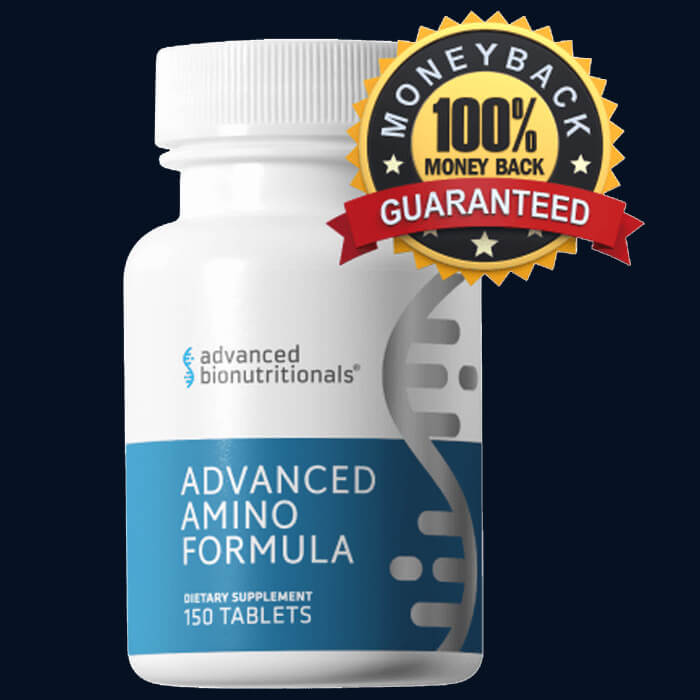
Advanced Amino Formula is a five-tablet daily blend marketed to adults who want a compact alternative to protein powders. The producer lists isoleucine, leucine, lysine HCl, methionine, phenylalanine, threonine, tryptophan, and valine. It states that the tablets are vegan, non-GMO, and free from common allergens including dairy, soy, gluten, eggs, nuts, and corn.
See the producer’s current presentation, label, and package options.
What stands out positively
- Compact alternative for people who do not want another shake.
- Ingredient names, allergen information, prices, and a 90-day guarantee are published.
- One-, three-, and six-bottle packages.
- Paid relationship with the physician endorser is disclosed.
What deserves caution
- The VSL uses stronger language than the research supports.
- The eight-amino-acid formula omits histidine, which standard references classify as essential.
- Evidence on amino acids generally does not prove this finished product improves strength for every user.
- It is not a substitute for meals, resistance training, or evaluation of new weakness.
Price and guarantee observed
- One bottle: $39.95
- Three bottles: $107.85 ($35.95 each)
- Six bottles: $199.50 ($33.25 each), with free shipping shown
- Guarantee: return within 90 days for a refund; customer pays return shipping
Prices and terms can change. Check the final order page and confirm whether any optional auto-ship offer is selected.
Want to inspect the formula for yourself?
Review the current label, presentation, price, and guarantee on the producer’s website before deciding.
Review the current detailsWho may want to explore it—and who should pause
It may be worth discussing if you struggle to use protein powders, want a compact amino-acid option, and already understand that exercise and overall nutrition remain the foundation.
Pause and seek individualized advice if you have unexplained weakness or weight loss, kidney or liver disease, PKU or another amino-acid metabolism disorder, take medicines with possible interactions, or have been told to limit protein or specific amino acids.
Questions to ask before deciding
- What specific gap am I trying to solve: low food intake, convenience, recovery, or something else?
- Does the serving provide enough of each listed amino acid to match the evidence being referenced?
- Why does this formula omit histidine, and what evidence supports that choice?
- Is the five-tablet daily routine realistic for me?
- What outcome will I track, and for how long?
The takeaway
Feeling less strong after 50 should not be dismissed as “just aging,” and it should not be reduced to a single supplement deficiency. Start with progressive resistance, adequate food and protein, recovery, and a review of health changes. Essential amino acids can be a useful nutrition tool in some situations, but results depend on the person, the formula, and the rest of the plan.
If you decide to explore Advanced Amino Formula, read the label, notice the missing histidine, verify the current price and guarantee, and treat the product as an optional addition—not a shortcut or treatment.
Visit the producer’s presentation to review the formula yourself.